SENIOR
NEWS
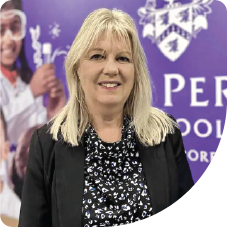
MESSAGE FROM THE PRINCIPAL
Summer Annuals
Across the world in term 3 students undertake Annuals which are assessments which contribute to a teacher’s and student’s assessment of their progress during the year through summative assessment. These tests and examinations provide opportunities for students to have honed their learning and revision skills in preparation for public examinations at IGCSE in Year 11 and A level in Year 13.
Year Ten Mock examinations in all IGCSE subjects.
A chance to experience IGCSE papers and the demands required in examinations conditions
Year 7-9 Core subject exams taken in Mathematics, English and the Sciences in more formal examination conditions in an examination hall to prepare students for future public examinations.
All the remaining subjects except for PE, Smart Learning and Global Perspectives will have end of year exams taken in class. Global Perspectives students are working on project based learning and so will undertake an assignment.
A Reminder of the Key dates:
- Y10 Assessments 20-29 April
- Y9 Assessments 4-8 May
- Y8 Assessments 11-15 May
- Y7 Assessments 18-22 May
As always students will be guided in revision techniques and supported by their specialist subject teachers. This is not a time for anxiety and for the students who have a variety of assessments across the year this is merely the end of year ones!
Students are encouraged to spend time ensuring they have their books and school work in order over the holiday and as expected at all times, to review their progress and take advantage of the opportunities provided by their subject teachers to develop and consolidate their learning to date.
Lynne Oldfield
Principal
Senior School Feature – Computer Science
Computer Science: Building Logical Thinkers and Problem Solvers for a Digital World
In today’s rapidly evolving digital landscape, Computer Science has become more than just a subject—it is a foundational discipline that equips students with essential skills for the future. At its core, Computer Science builds logical thinking and problem-solving abilities, empowering students not only to understand technology but also to create and innovate with it.
Developing Computational Thinking
A key aim of the IGCSE Computer Science curriculum is to develop computational thinking skills. This involves breaking down complex problems into smaller, manageable parts, recognizing patterns, and designing step-by-step solutions. These skills are not limited to coding; they are transferable across subjects and real-life situations, helping students become structured and analytical thinkers.
Understanding Problem Solving with Computers
Students learn the fundamental principles of solving problems using computers. Through topics such as algorithm design and problem-solving, they explore how to create efficient and logical solutions using flowcharts and pseudocode. This structured approach trains students to think critically and logically before implementing solutions in code.
Programming for Real-World Applications
Programming plays a central role in developing these skills. At The Perse School, students begin their journey with Scratch programming in Grades 7 and 8, where they design interactive games and educational tools. Platforms like Turtle Academy further enhance their understanding of logic through visual and creative coding.
Students have demonstrated remarkable creativity through projects such as:
- Ping Pong games
- Cake Clicker and Muffin Clicker
- Interactive quiz challenges
- Adventure and simulation games like A Rocket’s
- Adventure and Life on Land
These projects not only reinforce programming concepts but also show how coding can be applied to real-world and creative contexts.
In Grade 9 and beyond, students transition to Python programming, a powerful high-level language widely used in industry. By Grades 10 and 11, students are well-prepared for the IGCSE Computer Science (0478) syllabus, which focuses on programming, algorithms, flowcharts, and logical reasoning.
Exploring Core Computer Science Concepts
The curriculum also introduces students to key areas such as:
- Algorithms and Programming – designing efficient solutions
- Databases – managing and organizing data effectively
- Boolean Logic – understanding how computers make decisions
Students gain insight into how computer systems work, how components interact, and how technology supports modern life.
Awareness of Technology and Its Impact
Beyond technical skills, students develop an understanding of the internet as a communication tool and its associated risks, such as cybersecurity threats. They also explore automated and emerging technologies, preparing them to engage responsibly and thoughtfully with the digital world.
Student Achievement and Excellence
The impact of this learning is clearly reflected in student achievements. One outstanding example is Gordon, who has excelled in international competitions such as NRC, Bebras, Dr. CT, and RoboCup Asia Pacific. His accomplishments—including securing second place at RoboCup Asia Pacific 2025—demonstrate the power of computational thinking and programming skills developed through the curriculum.
Gordon has also created “Gordan Games,” a collection of browser-based games that showcase his creativity, coding ability, and passion for technology. His journey highlights how Computer Science nurtures innovation and real-world application.
Encouraging Creativity Through Projects and Collaboration
Students are encouraged to showcase their work during events such as Science Week, where their projects receive positive feedback from parents, teachers, and peers. These experiences build confidence and communication skills, reinforcing the value of their learning.
Additionally, enrichment opportunities like the CodeQuest: Create Your First Python Project programme provide students with hands-on experience in building real-world projects. Such initiatives strengthen logical thinking, creativity, and collaboration in a supportive environment.
Preparing for the Future
Computer Science education at The Perse School goes beyond teaching coding—it develops thinkers, innovators, and problem solvers. By combining theory with practical application, students gain the confidence and skills needed to navigate and shape the future.
In a world driven by technology, these abilities are invaluable. Whether students pursue careers in technology or other fields, the logical thinking and problem-solving skills gained through Computer Science will remain a lifelong asset.
By.Mohan Robert – MSc-IT, MBA-Ecom, MCom
CS & DT teacher Perse School
Senior School Science Term 2 Update
In Physics, under the guidance of Mr. Rajkumar Kalavadiya, Year 10 students explored the I–V characteristics of a filament lamp through a structured practical investigation. This enabled students to move beyond abstract theory and observe directly how resistance changes with temperature, reinforcing their understanding of non-ohmic conductors and the relationship between current and voltage.

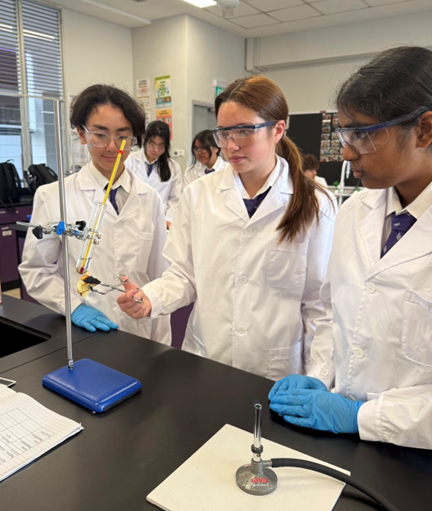

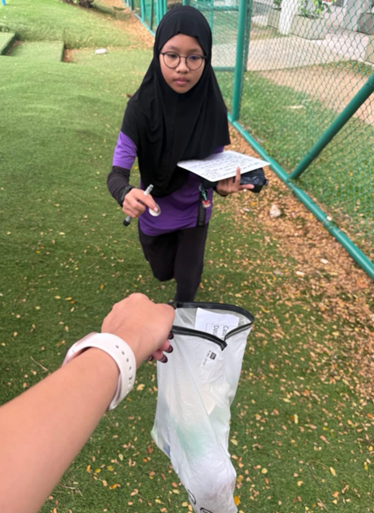
In Chemistry, led by Mr. Kamal Panchal, students across the year groups have built strong conceptual foundations. Year 7 students explored acids and alkalis in everyday life, developing early chemical understanding through relatable contexts. Year 8 students examined weather, climate, and the atmosphere, making interdisciplinary links between chemistry and environmental science. Year 9 students engaged with the reactivity series, strengthening their understanding of metal behaviour and displacement reactions, while Year 10 students developed deeper insight into redox reactions and electrochemistry, focusing on electron transfer and its applications.


Alongside curriculum delivery, the department has successfully concluded the Term 2 assessment cycle. Students have been supported in reflecting on their progress, identifying areas for development, and setting clear academic targets. In preparation for Term 3, curriculum content and assessment expectations have been clearly outlined to ensure students return with focus, clarity, and a strong sense of direction.
Overall, the term has reflected a strong emphasis on academic rigour, practical engagement, and the development of independent scientific thinking across the department.
Kamal Panchal
Head of Science
TED-Ed talk – see the video!
This has been prepared by the TED-Ed Club students and highlights the experiences of several students in Science at The Perse.

CONTACT US
The Perse School (Singapore)
58 Chestnut Drive S679301
office@perse.edu.sg
+65 6233 2183
www.perse.edu.sg