PRIMARY
NEWS
A MESSAGE FROM OUR HEAD OF PRIMARY Junior School (Yr 3 – 6) & Pelicans (Nursery – Yr 2)

As we move towards the few remaining weeks of the term, and the academic year, we are beginning to look ahead. The children will experience new classrooms, new teacher, new opportunities, and new challenges. Whilst the excitement of transition is certainly building, it also provides an opportunity to reflect on just how much growth has taken place over the past year. As adults, we sometimes focus on the next destination. Children, however, remind us that growth is happening gradually.
I know that many families are naturally curious about class placements for the children in August. Creating classes is a process that we approach with great care and consideration. Our teachers know the children exceptionally well; not only their academic strengths and learning needs, but also their personalities, friendships, confidence levels and the environments in which they are most likely to flourish.
Class organisation is therefore based on a wide range of factors, all carefully balanced to ensure that every child is placed in a setting where they can be successful, supported and challenged. It is a process that involves thoughtful professional discussion and collaboration between staff who have worked closely with the children throughout the year. To ensure that this process is completed thoroughly and with the children’s best interests at heart, class information for the new academic year will be shared with families closer to the start of term in August.
In the meantime, our focus remains firmly on making the most of the weeks ahead. There is still much learning to do, many memories to create and countless opportunities for our children to continue growing.
As one chapter begins to draw to a close, another is waiting to be written. We are incredibly proud of how far our children have come this year and excited to see them take their next steps with confidence, curiosity and enthusiasm.
The next chapter is nearly here, and our children are ready for it!
Warm regards,
Kephren Sherry
Head of Primary School
JUNIOR
SCHOOL
MELANIE MEDHI
Junior School Assistant Head (Academics, Yr 3 – Yr 6)
Primary School Maths Week!
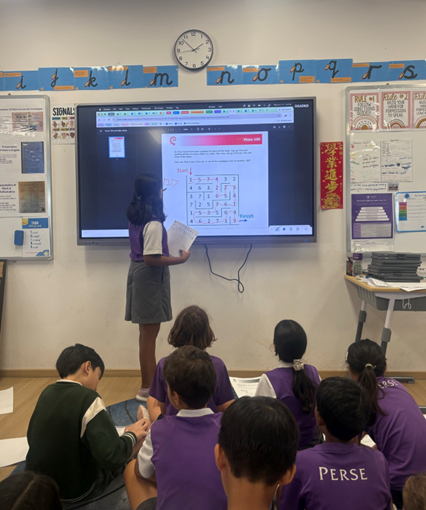
Maths week has been a bunch of fun in this week! “Impossible” puzzles, connect4 competitions and FIFA World Cup Math are some of the tasks completed. The children have been challenged with problems that have required patience. They have been working on their mathematical reasoning and justification which has made the maths seem “impossible”. All throughout the week we have seen Endeavour and Curiosity as the children have explored these complex mathematical challenges. All of the teachers are proud with the effort this week for Maths week. Daniel Brooks. Yr 5 Teacher.

Year 5 Camp
Here is a recap from our Yr 5 student Yu Yang Tan.
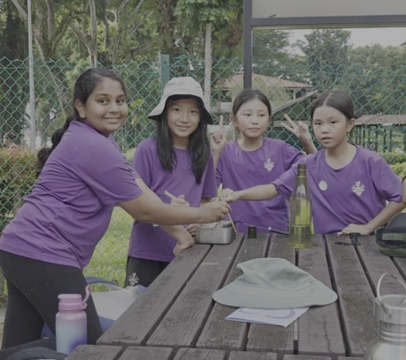
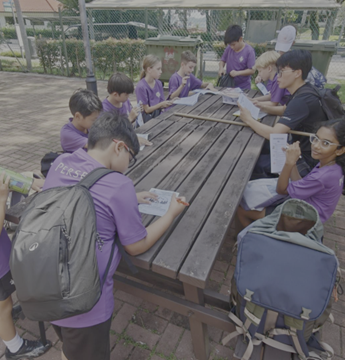
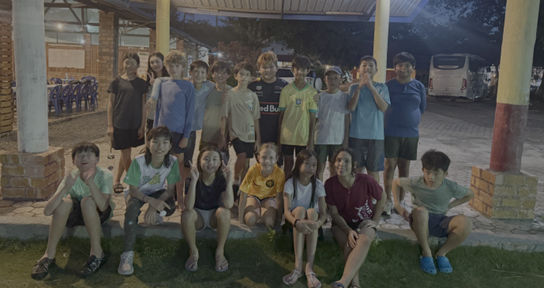
Year 5 recently travelled by bus to Changi for an overnight camp. After a briefing in the seminar room, students met their instructors, moved into their bunk rooms, and were told there would be prizes for best campers and best group.
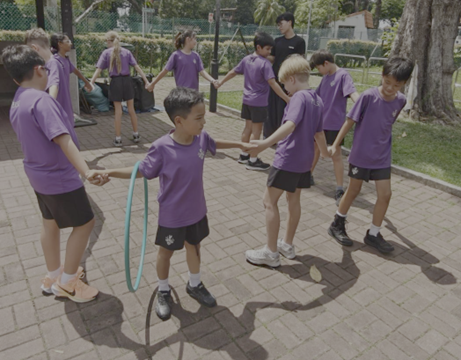
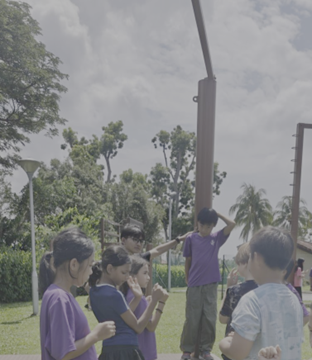
The first activity was making a group flag, with decorations from everyone in the team. Everyone’s flag looked cool. After that, we moved on to team-building games — Cup Stacking, where everyone controls a shared rubber band to build a pyramid of six cups, and Loopy Loop, where a hula hoop has to travel around a linked circle of people. Working in a team isn’t easy.
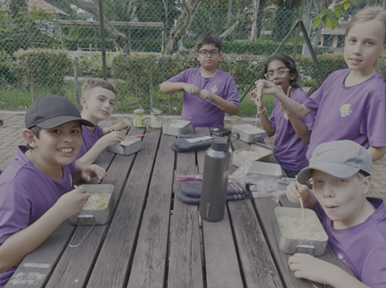
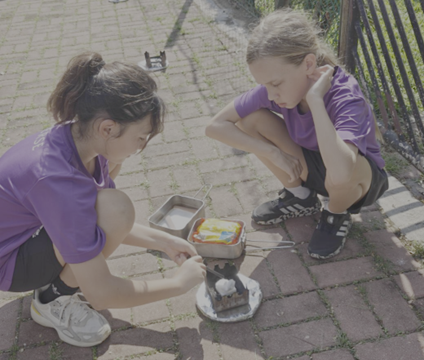
We then practised our campfire dance, which had to be at least three minutes long using a mix of songs. While we waited for outdoor cooking, we got a tutorial on using a Tommy Cooker, solid fuel, and flint and steel. Outdoor cooking was a fun and a terrific experience to cook noodles. We cooked instant noodles and a mystery dessert — ours turned out to be French toast with chocolate added, yum. We had a fun campfire dance night too.
The next morning we went to Pasir Ris Park and groups rotated between two activities: the Amazing Race, where you follow clues to different locations around the park and complete a puzzle or challenge at each one, and the low-elements ropes course — obstacles where you use your friends and surroundings to get through.
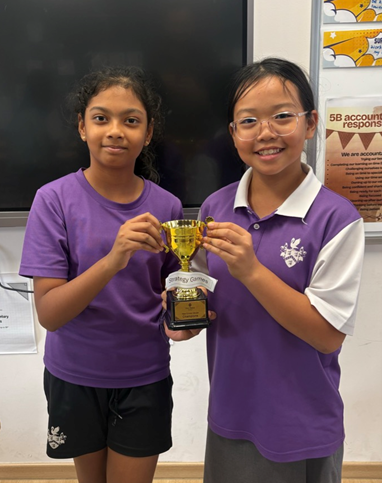
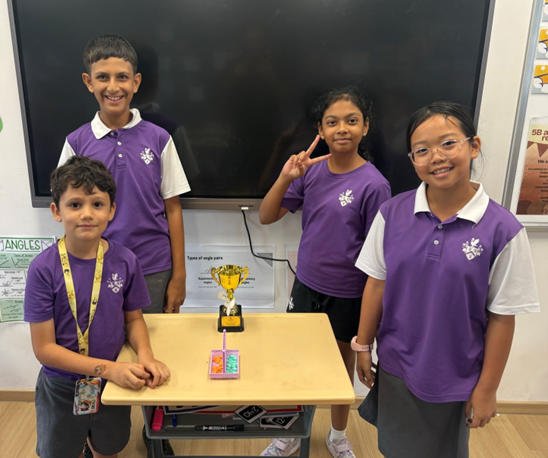
At the end, 16 Best Campers were announced, and the Best Group prize went to Group 7. Then we got back on the bus and went home.


Year 6 Camp
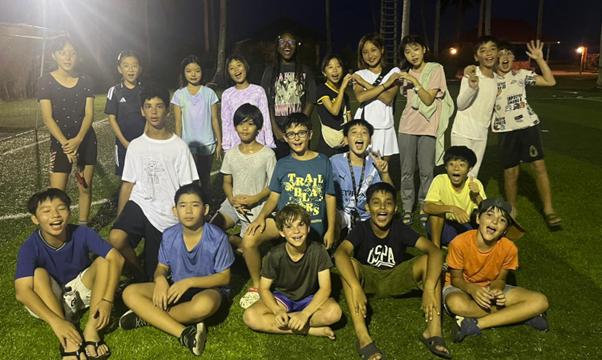
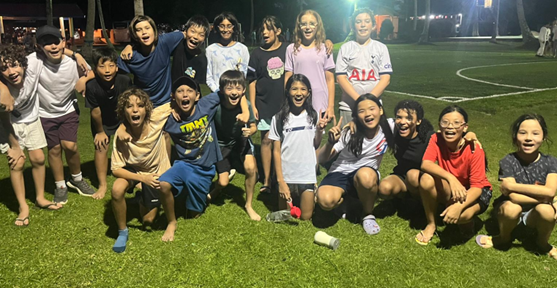
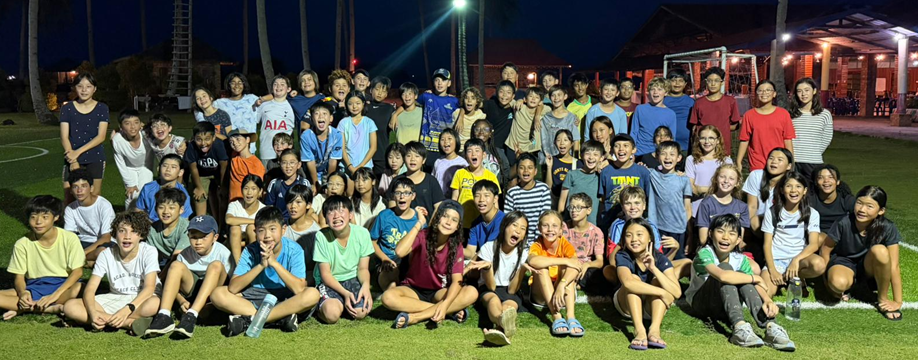
The Year 6 students went on a school trip to Bintan for 4 days and 3 nights. Everyone was having so much fun that it felt like the trip would never end! The trip lasted from the 2nd of June to the 5th of June. During the trip, we took part in many exciting activities, including skywalking, rock climbing, flying on the flying fox, and even climbing coconut trees to learn how the locals make a living. After completing the activities each day, we had free time to play football, basketball, and enjoy the playground. When we returned home, we were all disappointed that the residential trip was over. I know that we would all love to go back someday. It was the longest, most tiring, and best trip I have had so far. Jonathan Wong, 6B
Year 6 residential was the best week this whole year! Getting time to spend time with friends and making new friends. But the best bit of this awesome residential is getting to do the best activities ever with your friend. Like climbing coconut trees, kayaking, raft building, going to local villages and doing even more fun activities there. But best of all doing rock climbing, sky walk and flying fox. But not only were the activities fun, singing, dancing and roasting marshmallows around the bonfire. So its safe to say that no residential will ever beat this one. Ila, 6B

PELICANS
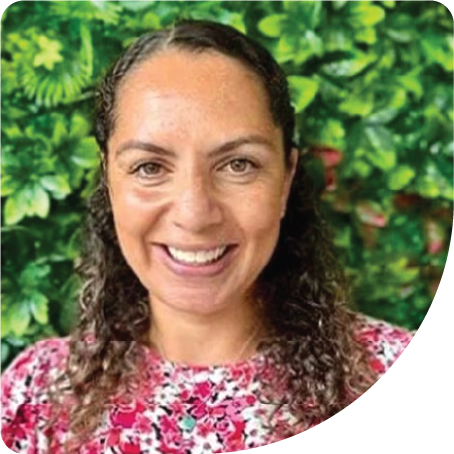
ALEXANDRA SOUTHWELL
Pelicans Co-ordinator (Nursery to Yr 2)
This week, our children have been immersed in a range of exciting Maths Week activities designed to develop both their mathematical understanding and their confidence as problem-solvers. Across Nursery to Year 2, pupils explored maths through practical investigations, games, challenges, and real-life contexts that encouraged curiosity and perseverance. Clara Cat and Tao Tortoise were incredibly impressed!
A key focus of the week was working mathematically. Children were encouraged to notice patterns, make predictions, test ideas, and explain their thinking. Through collaborative tasks, they learned that maths is not just about finding answers but also about understanding how and why solutions work.
We also placed a strong emphasis on reasoning skills. Pupils practised justifying their answers, spotting mistakes, comparing different methods, and using mathematical vocabulary to communicate their ideas clearly. It has been wonderful to see children confidently sharing their thinking and supporting one another to solve challenges. We are incredibly proud of the enthusiasm, resilience, and creativity your young mathematicians have shown throughout the week.
Best Regards
Alexandra Southwell
Pelicans Co-ordinator
Nursery
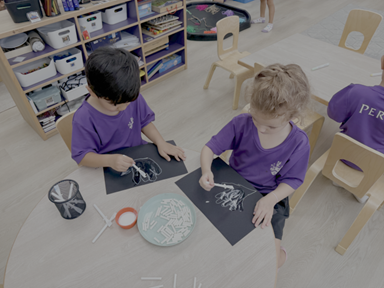
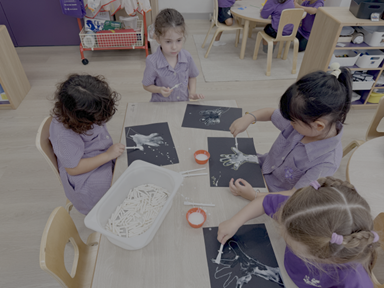
The Nursery friends have been learning about the letter /x/ and the sound it makes. As part of our learning, we explored X-rays and discussed what they are used for. The children were fascinated to discover how X-rays help us see the bones inside our bodies. To extend their understanding, we created our own X-ray craft by tracing our hands onto black paper and carefully adding “bones” to represent the skeleton inside. The children thoroughly enjoyed this creative activity while developing their fine motor skills and learning more about the human body.
Reception
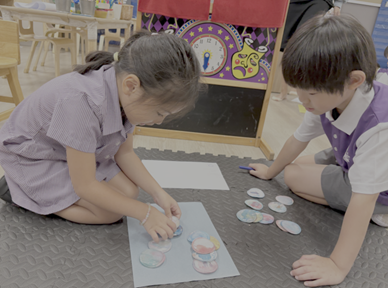
The children explored counting collections, where they were given groups of objects to count, organise, and compare. As they counted, they practised one-to-one correspondence, checked their totals, and discussed different strategies for keeping track of their counting. Some children grouped items into smaller sets to make counting easier, while others arranged them into lines or patterns. A key focus was helping children to record their thinking in different ways. They were encouraged to represent their collections using a variety of methods such as number sentences (equations), number bonds, drawn dots, lines, tally marks, or grouped pictures. This helped them understand that numbers can be shown in many different ways, not just written numerals. They explored doubles through practical activities using concrete materials and a story. The children explored how two equal groups make a double. They practised finding doubles such as 1 + 1, 2 + 2, 3 + 3, 4 + 4, and 5 + 5, and began noticing patterns in the totals. By building and comparing equal groups, the children developed a deeper understanding that doubles are made up of the same amount on both sides.

Year 1 & 2 Bilingual
Learning Through Stories – Exploring Radicals and Opposite Words!
This week, the children were introduced to a new Chinese radical: “竖心旁” (shù xīn páng). We looked closely at its shape and talked about how this radical is often related to feelings or emotions in Chinese characters. The children were encouraged to observe the radical carefully and try to recognise it in different words.
As part of our learning, we also listened to the classic story 《龟兔赛跑》 (The Tortoise and the Hare). Through this story, the children explored the actions and characteristics of the two animals. We talked about how the rabbit runs very fast (快 kuài), while the tortoise moves slowly (慢 màn).
This led us to our discussion about opposite words. The children learned that “快” (fast) and “慢” (slow) are a pair of opposite words. During the lesson, they were encouraged to think of other opposite words in daily life, such as big and small, long and short, tall and short.
Through storytelling, discussion, and word games, the children strengthened their listening skills, vocabulary understanding, and ability to make connections between language and real-life experiences. They also practised expressing simple ideas in Mandarin, such as “兔子跑得快” and “乌龟走得慢.”
Vocabulary learnt this week:
• 竖心旁 shù xīn páng — vertical heart radical
• 龟兔赛跑 guī tù sài pǎo — The Tortoise and the Hare
• 快 kuài — fast
• 慢 màn — slow
• 相反词 xiāng fǎn cí — opposite words
Through meaningful story-based learning, the children continue to build their Mandarin vocabulary, listening comprehension, and confidence in using simple Chinese words and sentences.


Year 2
Research is an important skill we are developing. Students have been identifying topics, generating questions, and gathering information from a range of sources. They are learning to take notes by identifying key words and phrases and organising their ideas using graphic organisers. We will use these skills to write a factual report.
We have been exploring multiplication, division, and fractions as connected concepts. Students are building their understanding by moving from concrete materials to pictorial representations and then to abstract methods. We use an “I do, We do, You do” approach to support learning, and differentiate by providing challenges with larger numbers, while offering scaffolds and manipulatives for those who need additional support.


Year 1 & 2 Bilingual
Y1 CEB Highlights
Year 1 CEB students have been enjoying reading and performing simple animal-themed poems. They have been busy identifying rhyming words and exploring repetition in poetry. The children excitedly performed short poems and discussed how poems look different from stories, noticing features such as short lines, rhyme, and repetition. Through shared reading activities, they created actions to accompany the poems and enthusiastically shared what they enjoyed about them. It has been wonderful to see their engagement and creativity as they brought the poems to life.


CONTACT US
The Perse School (Singapore)
58 Chestnut Drive S679301
office@perse.edu.sg
+65 6233 2183
www.perse.edu.sg