PRIMARY
NEWS
MESSAGE FROM HEAD OF PRIMARY

Dear parents,
This week, the primary students have taken part in several sporting events. These opportunities enable skill development within the students as they continue to impress us with how they participate and represent the school. We always talk about the importance of behaviour for learning in school, but it is equally important that this extends further beyond the immediate school environment.
Students understand what is expected of them in school because they receive consistent messages and reinforcement, so I am always incredibly proud when I witness the children applying what they know, beyond their classrooms.
When children receive consistent messages from both school and home about expectations for behaviour, they feel more secure and are better able to make positive choices. We encourage families to continue conversations at home about the importance of showing respect to others, taking responsibility for actions, and demonstrating good manners in school and in the wider community.
Thank you for your partnership and enabling us to support the children, in every way, together.
Kephren Sherry
Head of Primary School
JUNIOR
SCHOOL
MELANIE MEDHI
Assistant Head of Academics (Primary)
Assessments in Junior School
In the Junior School, assessment in English and mathematics follows the Cambridge Primary curriculum. The main purpose of assessment is to help teachers understand how well students are developing knowledge, skills and understanding over time.
A key part of this process is formative assessment, which takes place day in and day out in the classroom. Teachers constantly check students’ understanding through questioning, discussion, mini whiteboard responses, short tasks and careful observation of students’ work. This allows teachers to identify misconceptions quickly, adapt lessons and provide immediate support where needed. In this way, assessment is closely integrated with teaching and learning rather than being something that only happens at the end of a unit.
Assessments in English
In English, students are assessed through a range of reading, writing, spelling and grammar activities completed during normal lessons. Teachers regularly review students’ work in exercise books, short writing tasks and reading responses to see how effectively they are applying the skills that have been taught. At key points in the year, students may also complete Cambridge-style assessments that reflect the objectives of the curriculum, focusing on reading and writing.
Assessments in Mathematics
Mathematics assessment focuses on students’ conceptual understanding as well as their ability to apply skills to solve problems. Alongside daily formative assessment, students complete occasional written assessments linked to Cambridge Primary objectives. These provide teachers with a snapshot of progress and help ensure that key concepts are secure before moving on to new learning.
Assessments in English as an Additional Language (EAL)
For students who are learning English as an Additional Language (EAL), assessment focuses on the development of core language skills. EAL assessments typically evaluate reading and usage, listening and writing. This helps teachers understand how well students are developing their ability to understand spoken English, read and interpret texts and express their ideas in writing. EAL specialists work closely with class teachers to ensure that assessment results inform classroom support.
Supporting Student Progress
Through this balanced approach, assessment supports learning rather than interrupting it, helping every student to make strong and sustained progress. We are currently fine-tuning our assessment process and look forward to sharing it with parents in the near future. Below, are a few example questions from the recent assessment week, to give you a flavour of Cambridge-style assessments.
Looking Ahead
Our next Cambridge assessment week will take place towards the end of the final term (late May/early June) and more details will follow.
In the classrooms
Cambridge assessments often include questions involving Venn diagrams. These examples below show Cambridge-style assessment questions and the progression from Year 3 to Year 6. How many of these can you solve?
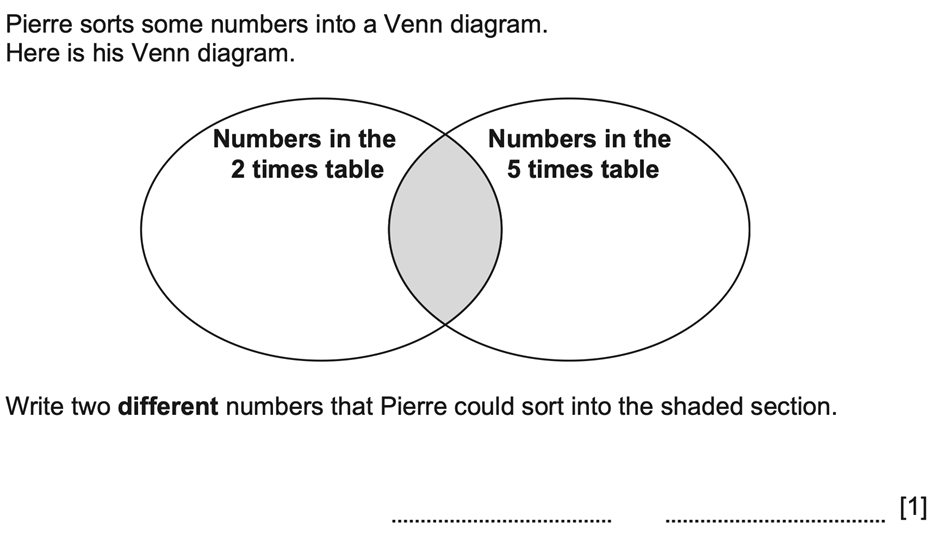
Year 3
This is an example of a Y3 level Venn diagram question that assesses students’ ability to classify items and their knowledge of multiplication tables.
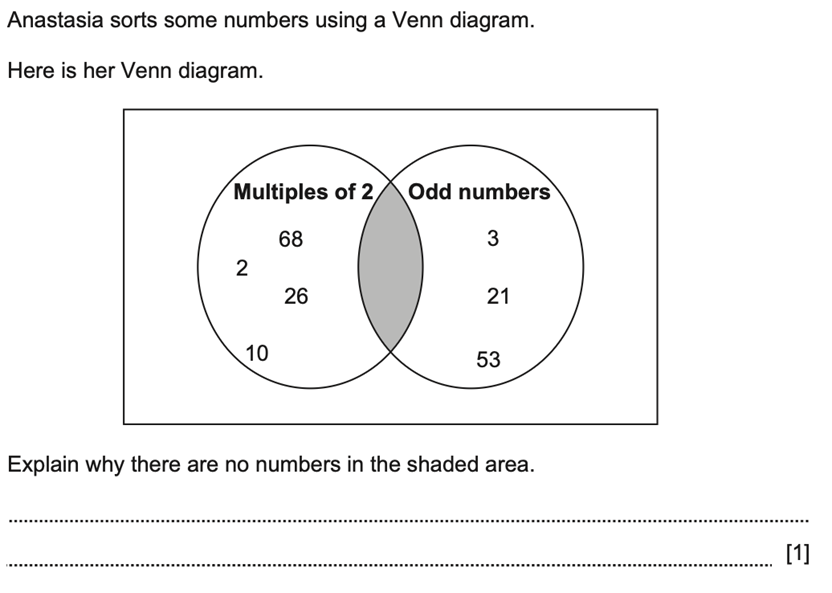
Year 4
The Year 4 Venn diagram question is assessing knowledge and understanding of odd and even numbers as well as the skill of reading the Venn diagram.
Year 5
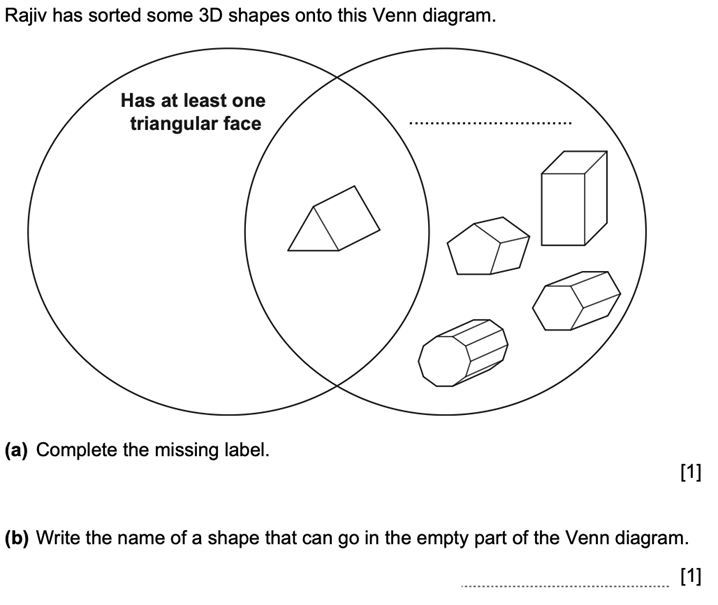
From a Year 5 past paper, this Venn Diagram focuses on knowledge of 3D shapes and their properties.
Year 6
The Year 6 Venn diagram example question assesses students’ knowledge and understanding of either the ‘divisibility rules’ or requires some short division calculations to find the answers.

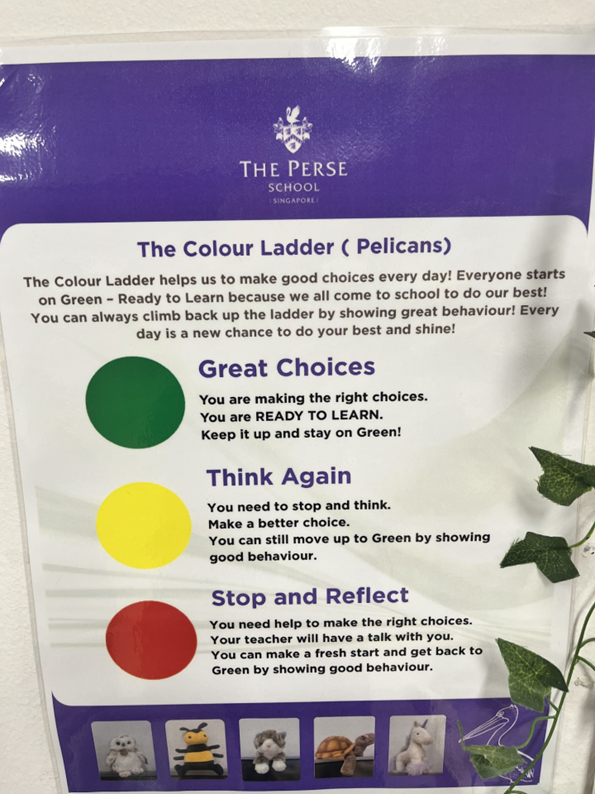
PELICANS
ALEXANDRA SOUTHWELL
Pelicans Coordinator
As we reach the final weeks of Term 2, it has been wonderful to see how the Pelicans have changed and grown. We are seeing improved independence in daily routines, children becoming more confident when sharing ideas and speaking in front of the group, and stronger friendships forming through play and collaboration. Many children are also developing early problem-solving skills, showing curiosity in their learning, and beginning to take greater responsibility for their belongings and classroom spaces. It was a pleasure to share this progress and relevant next steps with you at the PTC meetings this week.
The children have also been very enthusiastic about earning house points this week. Points are awarded when children demonstrate responsibility, kindness, perseverance, and positive participation in their learning. While the children enjoy celebrating their individual achievements, they are also excited to see their points contribute to their house total. This helps them understand that their personal choices and efforts contribute to a shared team goal, encouraging both independence and a strong sense of community within the class.
Nursery
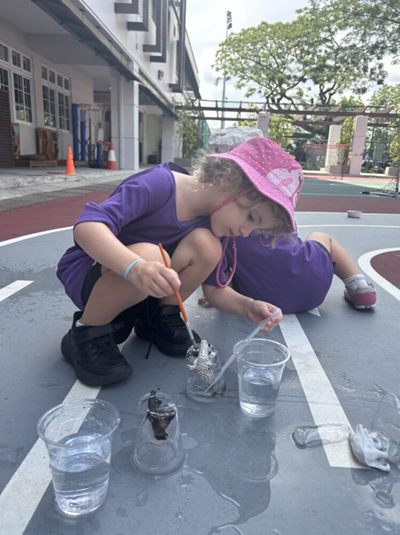
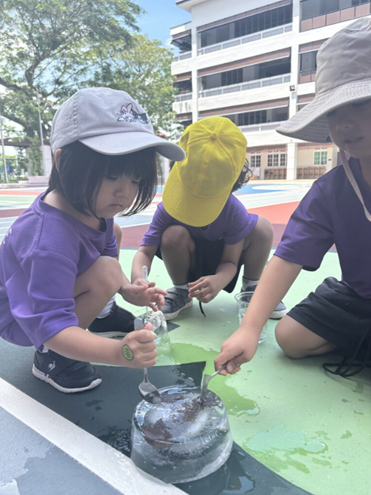
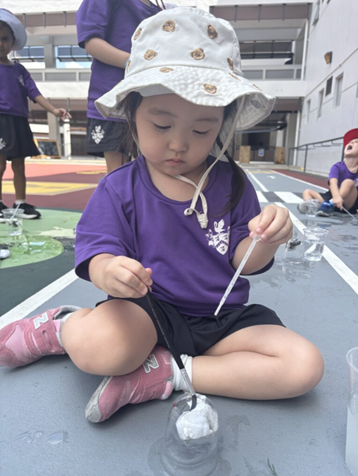
This week, we explored polar animals through an exciting Ice Rescue Mission! Our Arctic animals were trapped in blocks of ice, and the Nursery students worked together to carefully rescue them. The children used different tools and strategies to help melt and break the ice, freeing the animals one by one. It was a wonderful hands-on activity that encouraged teamwork, problem-solving, and curiosity about animals that live in the Arctic.
Reception
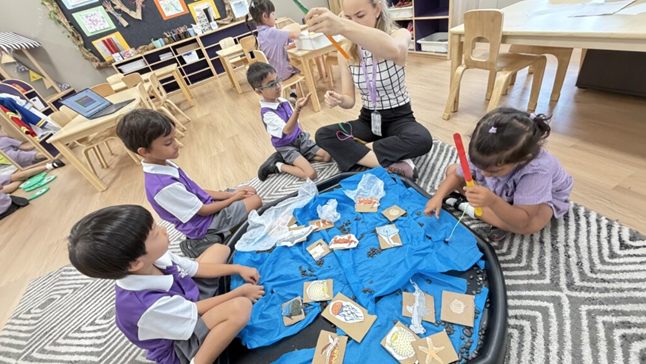
Through the fishing activity, children practiced key English language skills by listening carefully to spoken key words and responding appropriately. They caught fish from different areas of the classroom “ocean” and turned them over to find letters or digraphs attached behind them.
Using these sounds, the children worked together to blend single letter sounds and digraphs to form key words such as shark, swim, fish, and sea.
As they built the words, children practiced identifying letter sounds, recognizing digraphs such as sh, and blending sounds together to read simple words. They also talked about where they caught their fish and showed their letters to the class, helping them develop listening, speaking, and phonics skills while communicating their ideas using both verbal and non-verbal communication.

Nursery/Reception Bilingual
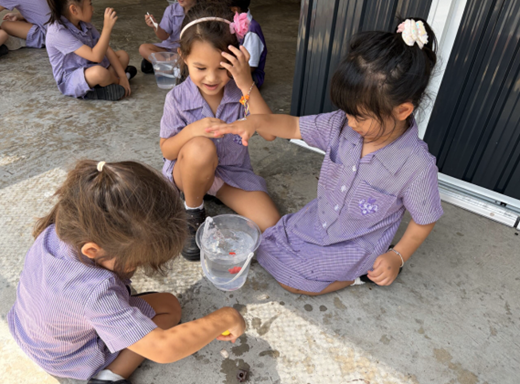
Wonderful Water
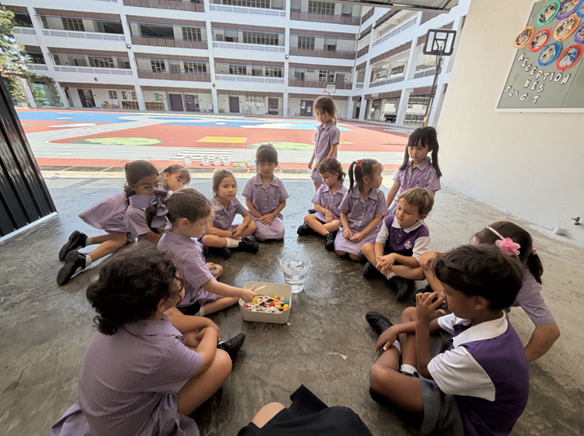
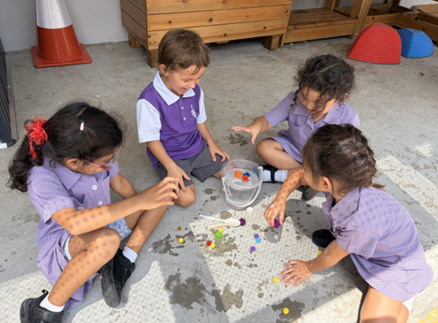
The children explored how water can make different sounds when objects are dropped or placed into it. They experimented using a variety of objects, including plastic balls, to listen to the splashes and notice how the size and weight of each object changed the sound. This helped them understand that water can produce different sounds depending on what touches it and how it moves.
The children then took part in a water relay game in two teams. In the first round, they ran to the bucket and transferred water using a cup. In the second round, they tried a different method by pouring water over their heads to the person standing behind them, who attempted to catch it. This activity encouraged teamwork, coordination, and lots of laughter.
During the activity, we talked about water wastage and why water is important in our daily lives. The children learned that even when playing with water, we should be mindful not to waste it. We also revisited how moving water can create different sounds, linking their physical play back to their earlier sound exploration.
Through this lesson, the children developed their listening skills, cooperation, and awareness of water as a valuable resource.

Year 1
English (Culinary lab): As an extension of our Instructional Writing topic, students explored how instructions are used in real-life situations. They discussed a recipe for making energy balls during our Culinary Lab activity and identified the key steps involved in the process.
The students worked together to arrange the recipe steps in the correct order and then tried making the energy balls themselves by carefully following the instructions. This hands-on activity helped them understand how instructions guide us in completing tasks step by step.
They also discussed how they could add their own creative twist to the recipe, thinking of different ingredients they could include at home to suit their personal tastes. This activity helped students connect instructional writing with practical, real-life experiences.


Mathematics: Students engaged in a cashier machine activity where they had the opportunity to experience a real-life money transaction. They selected two items from a set of choices and calculated the total cost. The students then used the cashier machine to make the payment and even practiced swiping a card, just like in a real shop.
This activity helped them connect their learning about money with real-life situations and understand how a mini shop cashier works. It was an engaging way for students to practice calculating costs and handling money in a practical context.


Year 2
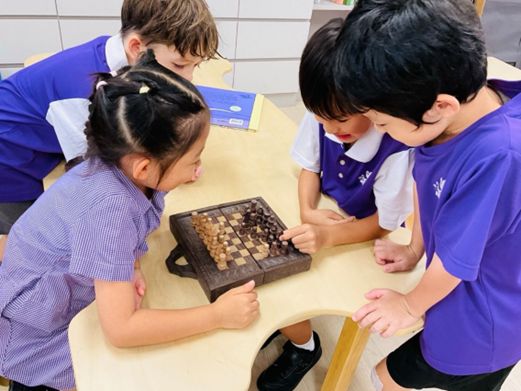
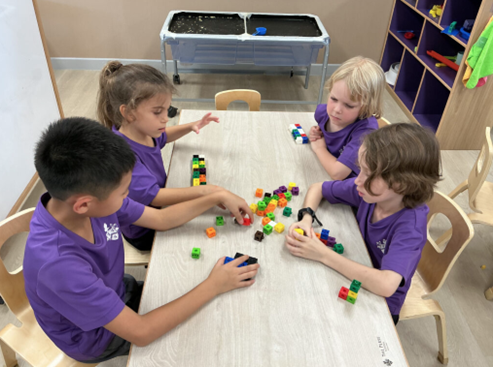
Things settled back into a steady rhythm in Year 2. As part of our learning environment, we make use of continuous provision, which refers to the different learning areas and resources available for students to use every day to support their learning and development. Students have been actively using these areas to practise skills, explore ideas, and apply what they have been learning in class.
The week ended with our Parent Teacher Conferences, which provided a valuable opportunity to celebrate the students’ successes and set learning targets for the new term.

Year 1 & 2 Bilingual

Little Mathematicians! This week in math, we learned different ways to make the same amount of money. the kids were immediately hooked. They loved figuring out how many different combinations of coins can add up to the same value. This practice is getting them ready for our upcoming Class Store activity, where they’ll get to be real shoppers and cashiers. Can’t wait to see their math skills in action!
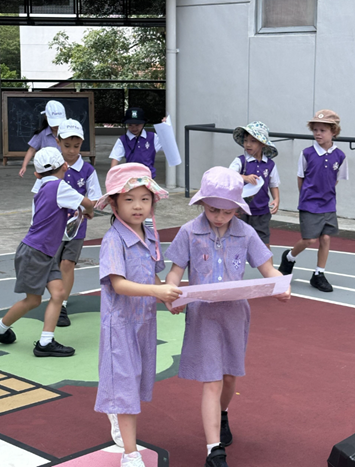
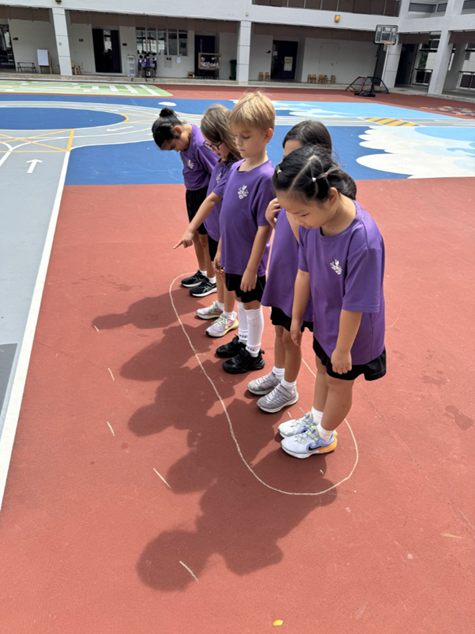
Where Is the Sun? There Goes the Shadow! This week we took the kids to the playground for a fun shadow experiment! We discovered something magical: in the morning, shadows are long and stretched out. at noon, they hide right under our feet. The kids had a blast chasing their own shadows.

Chinese Y1 CEB
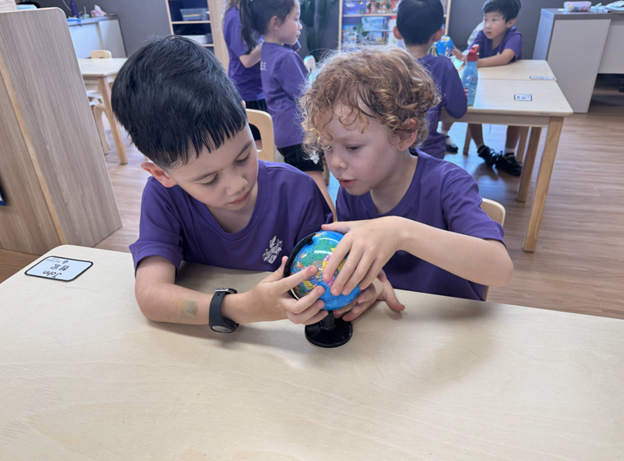
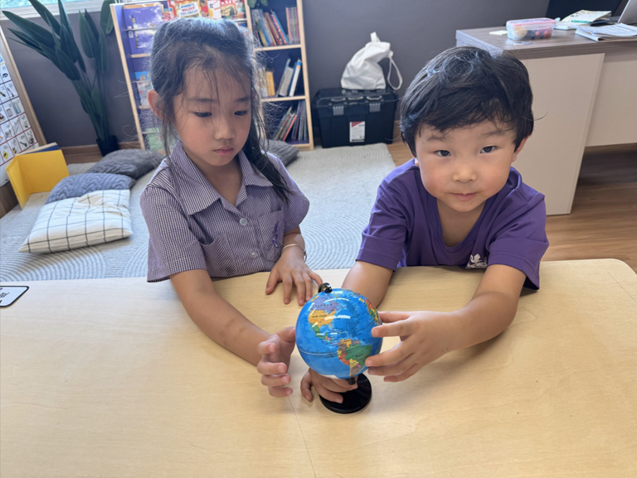
This week in Science, our Year 1 explorers have been learning about the Earth. Through engaging activities, the children discovered that our planet has both land and water. They looked at globes and maps, identifying blue areas as oceans and green or brown areas as land. The children enjoyed sorting pictures into “land” and “water” categories and even created their own simple maps showing both. This hands-on learning helped them understand that Earth is a special planet with just the right amount of land and water for us to live.
Chinese Y2 CEB
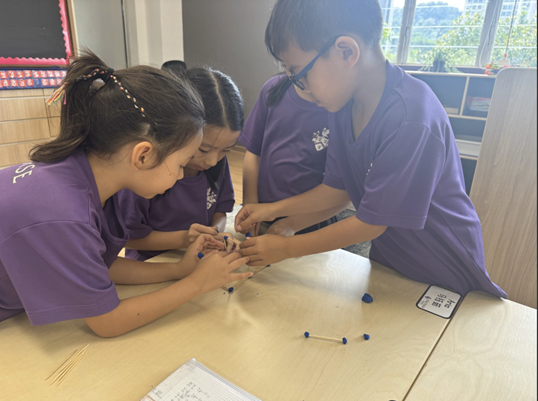
This week in Maths, our Year 1 mathematicians have been exploring 3D shapes. Using toothpicks and playdough, the children became little architects, constructing their own 3D shapes like cubes, pyramids, and triangular prisms. Through this hands-on activity, they discovered important properties of shapes—counting faces, edges, and vertices. The children were excited to see how flat 2D shapes can come together to form 3D objects, and they enjoyed comparing their creations with friends.

Students had a head start to Book Week by creating a Book Box to showcase their favourite books, and there was no shortage of creativity and resourcefulness in their designs. We also had the opportunity to meet Neil Humphreys, and some of us were thrilled to have our newly purchased books signed by him. The Book Parade was great fun, with everyone arriving in wonderfully creative costumes. It has truly been a joyful and memorable Book Week.

CONTACT US
The Perse School (Singapore)
58 Chestnut Drive S679301
office@perse.edu.sg
+65 6233 2183
www.perse.edu.sg