PRIMARY
NEWS
A MESSAGE FROM OUR HEAD OF PRIMARY Junior School (Yr 3 – 6) & Pelicans (Nursery – Yr 2)

Dear Parents,
Welcome back.
As I walked around the school during week 1 of Term 3, I witnessed so much growth – in every sense! Not only do the children look bigger, seem more confident, and are behaving with maturity, but the school has grown into a welcoming and inclusive space. Our student buddies have been eager to show their new friends around the school and are doing an incredible job.
Our PTA joined the Orientation Meeting last week to introduce their role within the parent community. It was extremely helpful for our new families to be welcomed so warmly and be given additional information from a parent point of view.
The increased number of bikes and scooters is also a clear indicator as to how our student numbers are growing. With this in mind, I would ask you to please remind your children about road safety and the importance of remaining alert when on the roads and pavements around school. Thank you for your support in this important matter.
We have a full and exciting term ahead for us all to enjoy together. Year 6 are preparing for Senior School, and we will shortly be sharing more information about how we are supporting their transition. Additionally, we have residential trips booked, sports day planned and performances being rehearsed. Ultimately, the term is full of additional and enriching learning opportunities.
Wishing you a wonderful weekend ahead.
Warm regards,
Kephren Sherry
Head of Primary School
JUNIOR
SCHOOL
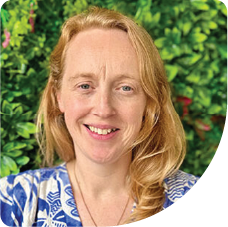
MELANIE MEDHI
Junior School Assistant Head (Academics, Yr 3 – Yr 6)
Formative assessment is one of the most powerful tools we use to support your child’s learning. Rather than waiting until the end of a unit or term to measure progress, formative assessment happens every day in the classroom. It includes questioning, discussion, working with mini whiteboards, feedback in books and checks for understanding that help teachers adapt their lessons in real time.
These techniques serve a simple purpose, which is to understand what each child knows now, identify what they need next, and respond immediately. This means teaching is not fixed, but responsive. If a concept has not been fully understood, teachers will revisit it, provide additional support, or approach it in a different way. If pupils are secure, they will be stretched further. This ensures that all children are appropriately challenged and supported.
A key part of this process is helping pupils to understand their own learning. We want children to be active participants, not passive recipients. In lessons, teachers share clear learning objectives (WALTs – we are learning to…) and success criteria (sometimes called WILFs – what I‘m looking for…) so that pupils know what they are aiming for. Through feedback and discussion, children learn to recognise what they have done well and what they need to improve.
You may hear your child talk about their “next steps” or “targets”. These are specific and manageable points that guide improvement. For example, a writing target might focus on using a wider range of sentence openers, while a maths target might involve explaining reasoning more clearly. By focusing on small, precise improvements, pupils build confidence and make steady progress over time.
We make use of WAGOLLs (What A Good One Looks Like). These are high-quality examples of work that show pupils exactly what success looks like. Teachers use WAGOLLs to model expectations and help children understand how to improve their own work. Pupils are encouraged to compare their work to these examples, identify strengths, spot areas for development, etc, etc. This makes targets clearer and more meaningful, as children can see what they are working towards.
We also place importance on pupils responding to feedback. Time is built into lessons for children to reflect, edit, and improve their work, often using pink pens. This helps them to see learning as a process rather than a finished product and encourages independence and resilience.
Ultimately, our aim is for every child to know where they are in their learning, understand where they need to go next, and feel confident about how to get there. Formative assessment is the key to making that happen.
This term, I have been meeting small groups of students to discuss their work and their next steps.
PELICANS
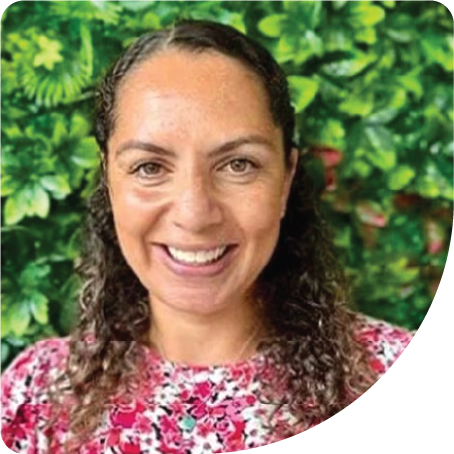
ALEXANDRA SOUTHWELL
Pelicans Co-ordinator (Nursery to Yr 2)
The Pelicans have made a fantastic start to the term. It’s been lovely hearing the buzz of conversations between friends as they share their experiences from the break, there’s a real sense of energy and connection across the group. I’m always impressed by how seamlessly children settle into routines and expectations, including those who are new to the school or have transitioned into different classrooms this term. Your continued support from home plays a huge role in this, and we truly appreciate it. As we move into this final stretch of the year, there’s much to look forward to; from Sports Days to our End-of-Year Performances. It promises to be a joyful and memorable term for everyone involved.
Best Regards
Alexandra Southwell
Pelicans Co-ordinator
Nursery
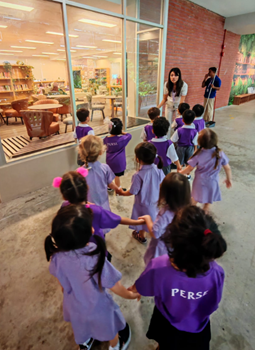
Our “Understanding the World” project this term is Chasing Shadows. We began our exploration by learning about different types of light sources and their purposes in our environment. The children shared that we need light to see and read. They also noticed that in the café, there is light in the oven, which helps to cook and keep food warm. We also discussed the importance of turning off lights when they are not in use to help save electricity.

Reception
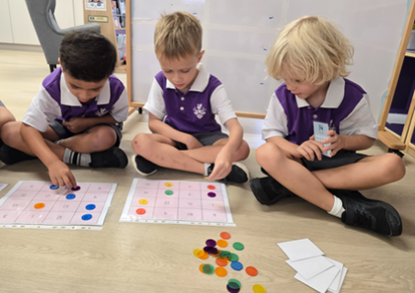
In week 1, the children focused on building their early math skills in a fun and engaging way. They were reintroduced to numbers from 0–30 and practised identifying numbers beyond 20.
A key focus was helping the children understand the difference between teen numbers (11–19) and numbers in the twenties. They learned that when a number starts with 1, it belongs to the “teens” (e.g. 13, 14, 15), and when the first digit changes to 2, the number becomes part of the twenties (e.g. 21, 22, 23).
One of the highlight activities was an extended Number Bingo game. This helped reinforce number recognition in an enjoyable and interactive way. Each child had the opportunity to call out numbers, giving them a chance to practise number recognition and build confidence when speaking in front of their peers. This also encouraged peer learning, as children supported one another by helping friends locate and identify numbers on their bingo cards.

Nursery/Reception Bilingual
Highlights Week 1:
Language Learning – The Gift《礼物》
(Lǐ Wù)
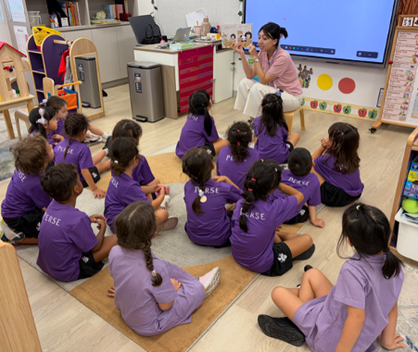
During our language learning session, we read the storybook The Gift together. We began by discussing when we might receive gifts. Some children shared, “On my birthday,” while others said, “At Christmas,” and some added, “When we go out.” When asked if they liked gifts, the children happily replied, “Of course!”
As we explored the story, the children discovered that gifts do not always need to be bought from a shop. They can also be handmade with care and love. We also learned that gifts are not only for special celebrations, but can also be given on other meaningful occasions, such as when visiting someone’s new home.
The children were introduced to and practised reading key vocabulary from the story, including 新家 (xīn jiā – new home), 漂亮 (piào liang – beautiful), 怎么样 (zěn me yàng – how/about), 做 (zuò – make/do), and 熊猫 (xióng māo – panda).
Through this lesson, the children developed their speaking confidence, listening skills, vocabulary recognition, and understanding that gifts can be a way to show kindness and thoughtfulness to others.
Year 1
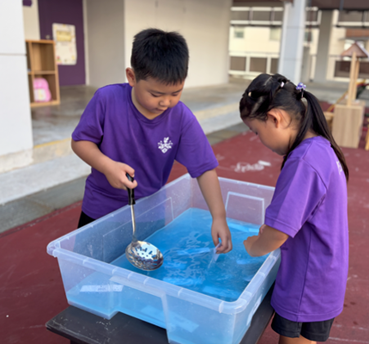
In week 1, students reflected on their Easter break through journal writing, focusing on sentence structure and punctuation. We are seeing strong progress in reading, as well as in answering questions about specific topics. They were introduced to poetry, exploring rhyme by reading, identifying rhyming words, and creating word charts. Students also learned about verbs, identifying them in poems. In small groups, they took part in a water tray word hunt to match verbs to body parts, then used this vocabulary to rewrite the poem “My Eyes Can See,” sharing their work to build confidence and fluency.

Year 2
Little Lab Project for Year 2
Our Farmer’s Market
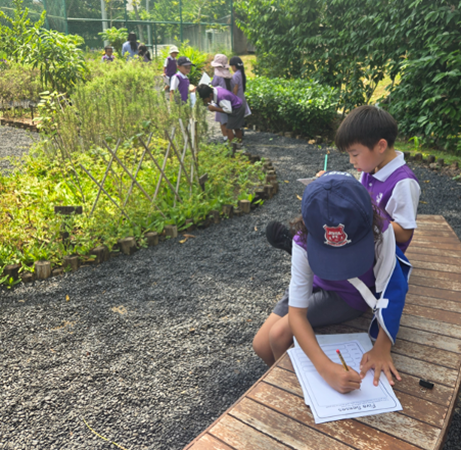
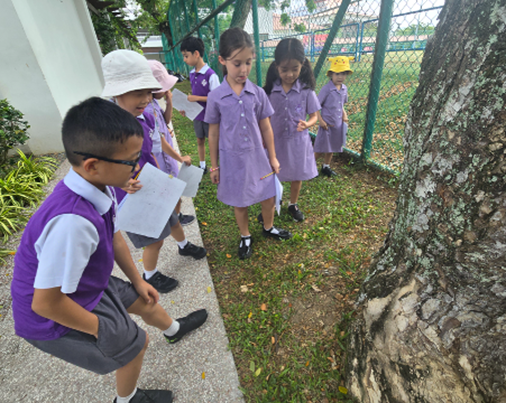
We have begun our new project theme: Our Farmer’s Market! To kick off our learning, the children went on a scavenger hunt around the school to explore different types of plants. They were given prompts such as finding a plant with long leaves, a tree taller than a building, flowers with blue petals, the biggest leaf, a palm tree, and a few more.
The children showed great curiosity and observation skills as they explored their environment. They also chose a plant of their own to sketch, using their five senses to carefully observe details such as shape, texture, colour and size. This helped them slow down and really notice the natural world around them.
A great start to our new project full of exploration and discovery!
Year 1 & 2 Bilingual
Highlight – Year 1
Weekly Learning Summary: Little Ocean Cleaners
This week, our learning theme was “Little Ocean Cleaners.” The children explored the issue of marine litter and learned about the harm it causes to marine life, such as sea turtles and fish (e.g., ingesting plastic or getting entangled). Through a hands-on activity simulating the cleanup of ocean trash, the children not only deepened their understanding of marine protection but also began to develop an initial sense of environmental awareness and responsibility. Overall, the children were actively engaged throughout the week, successfully achieving the teaching goal of fostering care for the ocean and taking action starting from themselves.
CEB1 Highlights Week 1 English Class:
Children have been curious and enthusiastic learners as we explore the topic of farmers’ market. They have been asking thoughtful questions to guide their learning, and it has been wonderful to hear their ideas and wonderings.
Here are a few of their voices:
- Aiya: “How many different types of fruits and vegetables do farmers’ markets sell?”
- Casper: “What other types of food do they sell?”
- Bill: “How much money do farmers make in a day?”
Alongside their questioning, the children have been very busy bringing their ideas to life. They have been creating their own farmers’ market stall, using junk modelling to design fruits and vegetables, and making posters and labels to organise and present their stall.
In English, we have been learning to spell question words such as what, why, who, where, and when. The children are also practising how to write questions.
In Maths, we are learning about fractions. The children have been exploring what half and quarter look like, how to represent them, and have been introduced to the terms numerator and denominator.
It has been wonderful to see how English, Maths, and our farmers’ market topic combine so beautifully, creating a seamless and meaningful learning experience for the children.
This hands-on approach continues to support their creativity, language development, and understanding of the world around them.


Highlight – Year 2
This week, children worked together in friendly small-group activities across different learning areas. They shared ideas, took turns, helped one another, and celebrated each other’s efforts with kind words and warm smiles. It was a wonderful week of teamwork, respect, and joyful learning together.



CONTACT US
The Perse School (Singapore)
58 Chestnut Drive S679301
office@perse.edu.sg
+65 6233 2183
www.perse.edu.sg